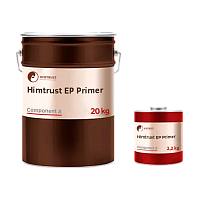
Product Description
Base (Component A) — a mixture of pigments and target additives in polymer resin.
Hardener (Component B) — aliphatic isocyanate.
The ground enamel coating is weather-resistant, durable, elastic; resistant to mechanical loads, exposure to ultraviolet, water, detergents, weak acids and bases, salts, oils, gasoline; can withstand temperature changes from minus 50°C to plus 60°C; less resistant to strong bases and acids. It can withstand short-term heating up to plus 140°C.
Physical and Mechanical Parameters
Table 1. Technical Characteristics of the Liquid Material
|
Indicator
|
Value
|
|
Recommended ratio of components: component A, parts by weight; component B, parts by weight
|
100:14
|
|
Pot life at (20 ± 2)ºC, hrs, not less than
|
5
|
|
Mass fraction of non-volatile substances, %, not less than
|
70
|
|
Volume fraction of non-volatile substances, %, not less than
|
55
|
|
Conditional viscosity according to VZ-246 viscometer (nozzle 4 mm) at (20±2)ºC, s
|
80–130
|
|
Degree of grind, µm, not more than
|
50
|
|
Consumption for single-layer coating, kg/m²
|
0.1-0.15
|
*The consumption was obtained during testing under laboratory conditions. It can vary by 5-40% depending on the application method (roller, brush, airless or pneumatic spraying), weather conditions, and the nature of the structures.
Table 2. Technical Characteristics of the Coating
|
Indicator
|
Value
|
|
Appearance
|
Smooth, uniform glossy surface
|
|
Coating Color
|
Production of various colors possible*
|
|
Gloss of Coating per Photoelectric Gloss Meter, %, at least
|
70
|
|
Drying Time of Coating to Degree 3, hrs, no more than
|
3
|
|
Coverage of Dried Film, g/m²
|
150 — 250
|
|
Resistance of Coating to Static Liquid Exposure, hrs, at least
|
Water
3% NaCl solution
Gasoline
Transformer oil
25% sulfuric acid solution
5% hydrochloric acid solution
3% food grade lactic acid solution
30% KOH solution
|
720
720
720
720
140
720
160
160
|
|
Heat Resistance at 140°C, hrs, at least
|
48
|
*According to the RAL catalogue or a sample approved by the buyer. To avoid differences in shades, it is recommended to use primer-enamel from one production batch.
Hygienic Characteristics
After curing, the coating does not have a negative impact on human health or the environment. In liquid form, the components of the coating cause irritation when they come into contact with the skin and can cause an allergic reaction. If they come into contact with the eyes, they cause pronounced irritation.
Preparation for Work
Requirements for Concrete Surface Preparation
Painting should be carried out on concrete of at least M300 grade. The concrete base must be aged for at least 28 days after pouring. The moisture content of the concrete surface should not exceed 4%, measured with an electronic moisture meter VSKM-12 according to GOST 21718. The concrete base should be treated with shot blasting, milling, or grinding equipment, cleaned from dust, dirt, stains and dedusted using an industrial vacuum cleaner.
Requirements for Metal Surface Preparation
Clean the surface manually or mechanically, giving it roughness:
-
Manual method — wire brush, spatula, scraper, abrasive (grinding) paper, rust chipping hammer;
-
Mechanical method — abrasive blasting, rotating brush, pneumatic hammer, grinding paper.
Clean without damaging or causing surface defects (dents, scratches, shells, burrs, etc.). Blow the surface with compressed air according to GOST 9.010, then degrease with solvent brands R-646, R-4, R-5, toluene, acetone. Prime the surface to prevent oxidation and re-contamination of the metal:
-
Within 12 hours after degreasing, for metal structures exposed to the open air;
-
Within 48 hours, for metal structures located indoors.
Requirements for Wooden Surface Preparation
Clean the surface from old coating, dirt, dust, and other contaminants. Sand the surface with a grinder or sandpaper until smooth. Level defective areas (chips, cracks) using wood putty. Sand the putty after drying. The moisture content of the wooden surface should not exceed 8%, measured with a moisture meter type MG4DM.
Requirements for Product Preparation
Before starting work:
-
Keep the primer-enamel and equipment for its application for a day at an air temperature of +15°C to +30°C;
-
Stir component A to form a homogeneous mass for 5 minutes using a mixer with a spiral nozzle (ZUBR MR-1400-21 or similar), at a speed of 300-450 rpm;
-
Mix components A and B in the recommended ratio until a homogeneous mass is obtained.
Requirements for Application Conditions
-
Air temperature from +5°C to +30°C;
-
Substrate temperature from +5°C to +30°C and above the dew point by 3°C;
-
Relative air humidity less than 80%.
The primer-enamel can be applied at reduced (down to −10°C) and increased (up to +35°C) temperatures, considering the change in viscosity of the mixed components, curing times, and overlap intervals with the temperature dependence of the material’s curing reaction (Table 4).
Safety Measures
Avoid working near open sources of fire. Ensure ventilation and firefighting equipment when working with polyurethane primer-enamel in enclosed spaces. Use personal protective equipment: special clothing, gloves, footwear, safety goggles, and respirator.
If the product comes into contact with skin, remove it with a cotton swab or cloth, and wash the area with warm soapy water. If it enters the eyes, rinse with a large amount of water. Seek medical attention if irritation occurs.
Rules for Processing/Application
Apply the primer-enamel using:
Airless spraying (using a spray gun similar to HYVEST 7300)
Pneumatic spraying (using a spray gun similar to FUBAG BASIC S1000/1.8 HP)
Manually with a brush or roller
Table 3. Recommended Application Parameters
|
Parameter
|
Recommendations*
|
|
Recommended thinner
|
Orthoxylene, petroleum xylene, toluene
|
|
Airless Spraying
|
|
Maximum thinner content, %
|
5
|
|
Working pressure, MPa (bar)
|
12–16 (120–160)
|
|
Nozzle diameter, inches (mm)
|
0.011–0.017 (0.28–0.43)
|
|
Spray angle, degree
|
20–60
|
|
Pneumatic Spraying
|
|
Thinner content, %
|
Up to 10
|
|
Working pressure, MPa (bar)
|
12–16 (120–160)
|
|
Nozzle size, mm
|
1.5–2.0
|
*The parameters are recommended and may vary depending on the capabilities of the used equipment, configuration of structures, and temperature conditions.
Apply the paint layer by layer, considering the waiting time between layers. The total thickness of the finished coating should not exceed 120 microns.
Control the thickness of the finished coating using a thickness gauge like Constanta K5.
Table 4. Drying Time Dependency on Temperature
|
Air Temperature During Application, °C
|
Maximum Drying Time for One Layer Application, hours
|
|
−10
|
9
|
|
+5
|
7
|
|
+10
|
5.5
|
|
+20
|
4
|
|
+35
|
2
|
Problems and Solutions
Problem: The base of the primer-enamel (Component A) delaminates during prolonged storage.
Solution: Stir Component A to form a homogeneous mass for 5 minutes using a mixer with a spiral attachment (ZUBR MP-1400-21 or similar) at a speed of 300–450 rpm.
Problem: Poor flame spread during spraying due to high viscosity.
Solution: Warm the components of the primer-enamel to a temperature of +15°C to +30°C, keeping them in a heated room for a day, or dilute with a solvent (Table 3).
If the flame spread is still insufficient after diluting the primer-enamel, adjust the working pressure of the apparatus or the diameter of the nozzle.
Transportation and Storage Conditions
The primer-enamel should be transported at temperatures ranging from 0°C to +30°C using all types of covered transport vehicles, in accordance with the rules for cargo transportation applicable to each mode of transport, ensuring the integrity and secure fixing of the packaging to prevent damages and leaks, as per the requirements of GOST 9980.5.
Store the primer-enamel in covered warehouse spaces in its closed original packaging, under conditions that prevent the ingress of moisture and direct sunlight. The storage temperature should be between 0°C and +30°C.
The storage life under the recommended conditions is:
-
Component A — 18 months from the date of production;
-
Component B — from 6 to 12 months, as recommended by the manufacturer.
It is not advisable to use the primer-enamel if the packaging is not airtight, damaged, or past its storage life. The use of primer-enamel is permitted after its storage life has expired, provided that its technical characteristics are confirmed to meet the established requirements.